Split
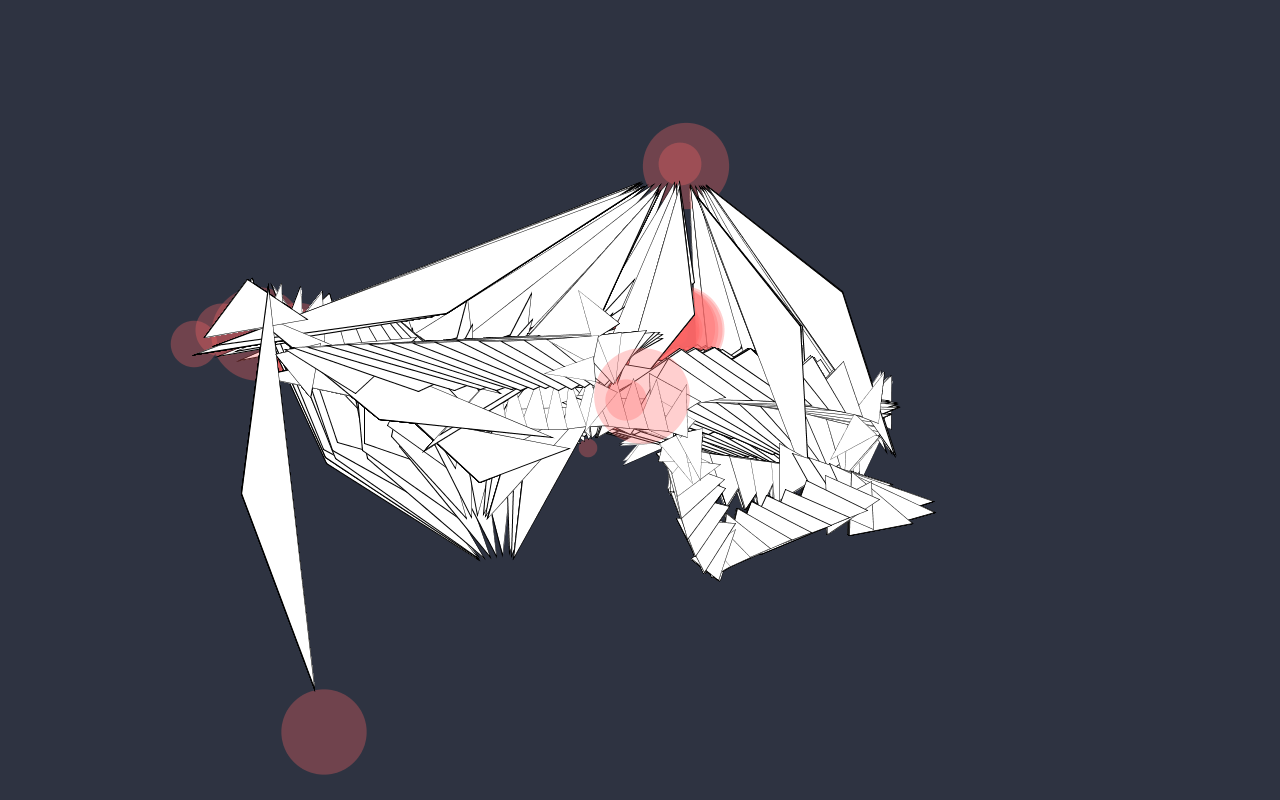
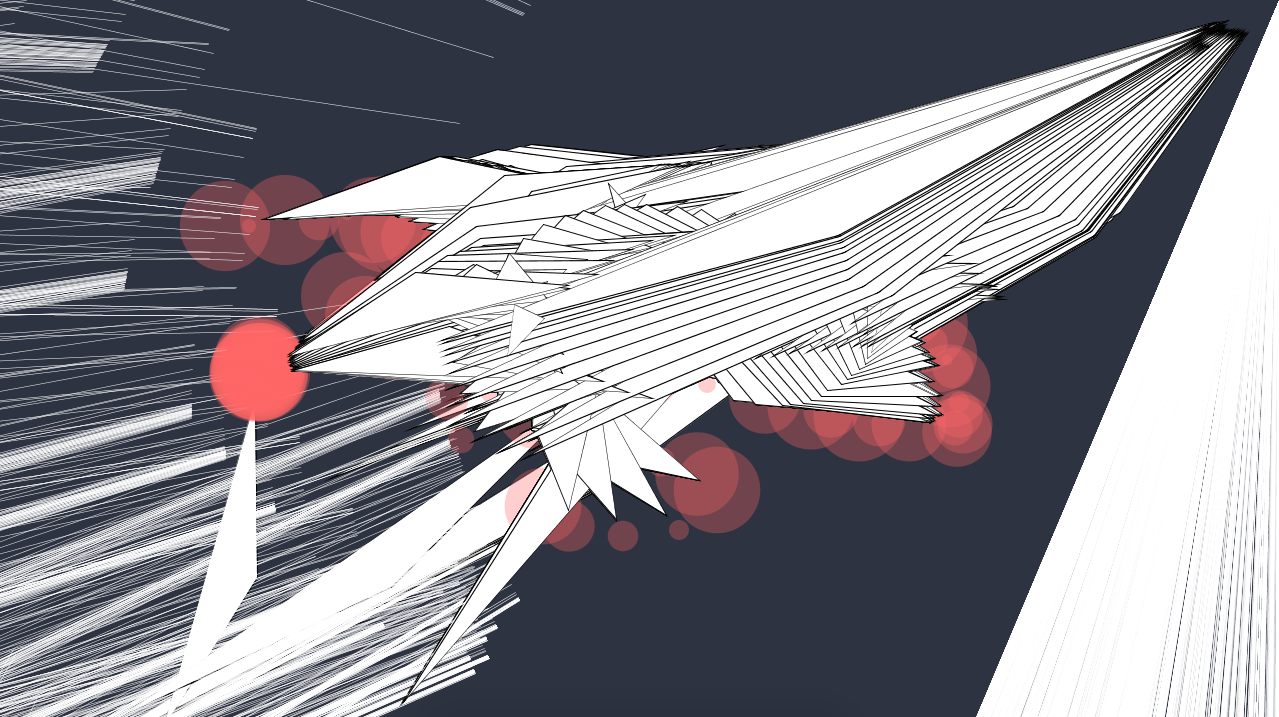
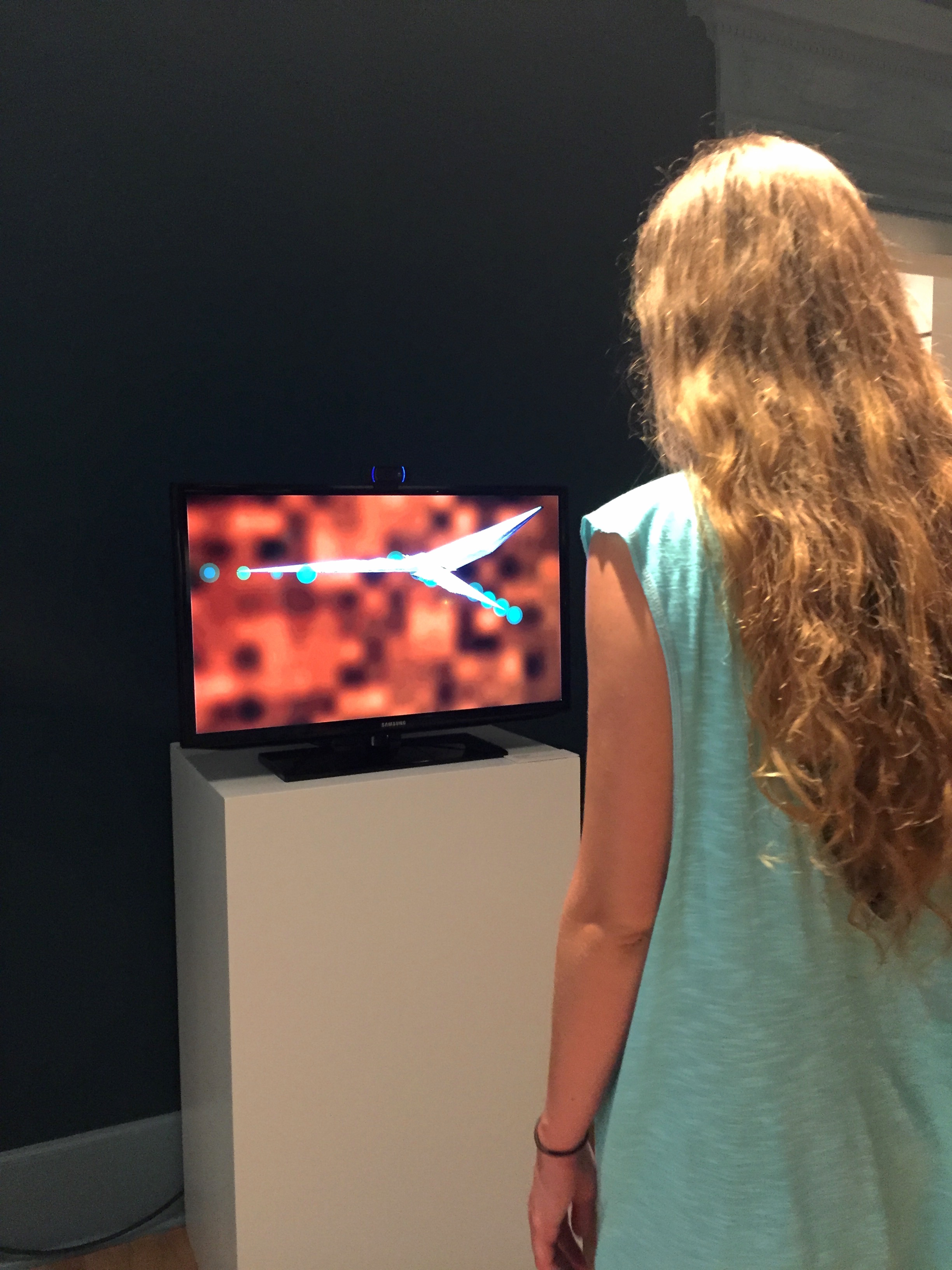
Split is an interactive art piece that moves in digital space while you move in physical space. If you move quickly, bold triangular blades lance across the screen to meet you where you stand. Move slowly, and they lag and glitch, uncertain of where to go. This interactive, computational art installation is generated by custom software written in Processing. A webcam sitting atop the screen captures a continuous video feed, which is processed by a facial recognition algorithm. Found faces are tracked and mapped in real time to a 2D array of pixels, and then translated to a reactive video display.
Exhibited in a gallery show at the Williams College Museum of Art.
See the source code on Github
Brainstorming Process:
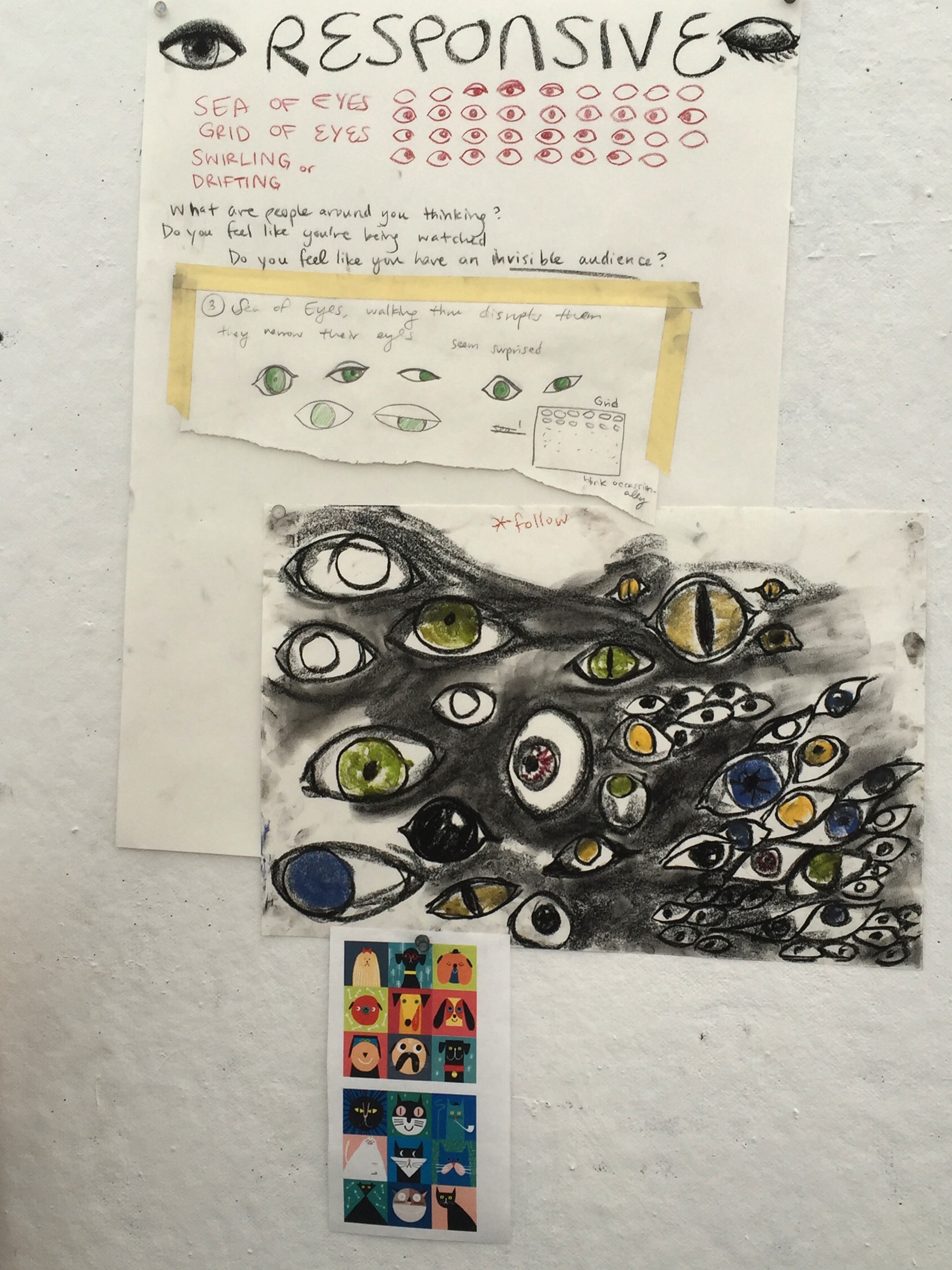
Drawing inspiration from the work of Camille Utterback and Theodore Watson, and Petros Vrellis' interactive Starry Night app, I started with some early sketches.


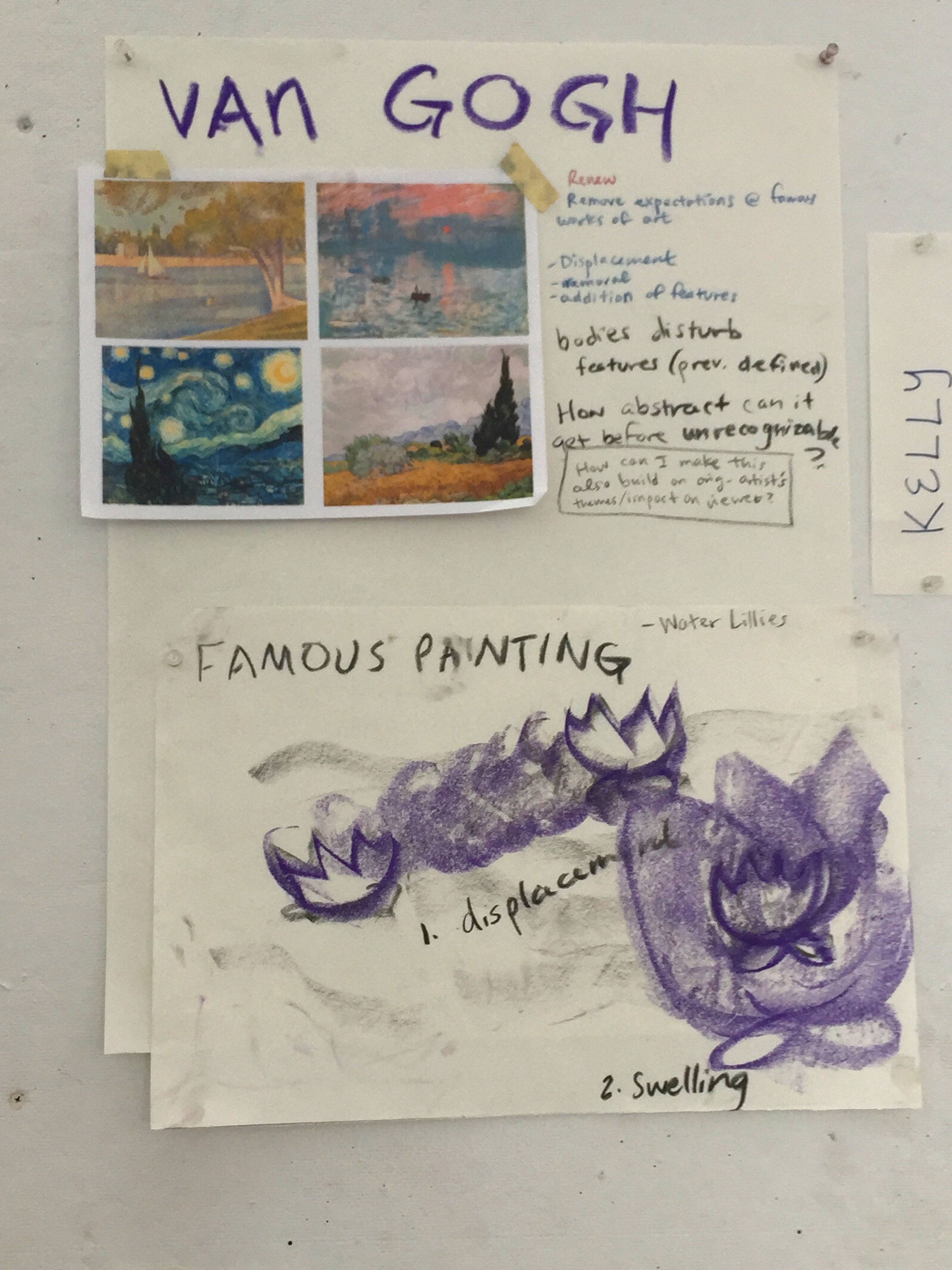


Working out the facial recognition and tracking was an iterative process. I also experimented with reactive pattern-making, and using different abstract shapes and colors. Throughout the process, I was increasingly drawn to the overlapping shapes and the assertive, sharp edges of the triangles. As people move laterally through the space in front of the screen, the long, blade-like triangles lance across the screen towards found faces (denoted by the green circles in the final piece).